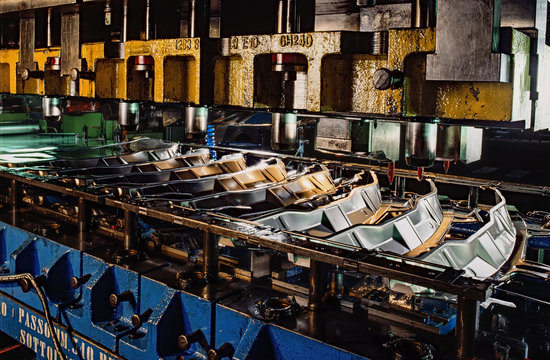
Metal stamping is a high-speed, high-precision business. Presses cycle hundreds of times a minute, tolerances are measured in thousandths of an inch, and a single bad coil or a worn die can cascade into thousands of rejected parts before anyone notices.
Yet most stamping shops still run on data systems designed for an era of clipboards and shift-change whiteboards. The result is decisions made on guesswork, costs hidden in plain sight, and improvement opportunities that never get acted on because no one can see them clearly.
Here are the most common data problems in metal stamping, each with an honest look at what it costs, how to fix it, and what the operation looks like when the problem is solved.
The Numbers Behind the Problem
Gartner estimates that poor data quality costs organisations an average of $12.9 million per year. In metal stamping, where margins are tight and operational events are costly, that figure hits directly in scrap, downtime, and tooling.
Siemens’ True Cost of Downtime 2024 report found that an idle automotive production line costs up to $2.3 million per hour. When finance and operations are working from manually assembled reports, the gap between when a problem starts and when it appears in any financial view can be a full shift or longer.
In that window, a line stoppage becomes a period trend. An expediting cost becomes a budget pressure. A quality issue becomes a warranty exposure. A correctable variance becomes an absorbed loss.
In most shops, the data needed to cut scrap in half already exists on the floor. It just is not being collected.
1.MANUAL PRODUCTION COUNTS AND PAPER-BASED SHIFT LOGS
The most expensive data source in your shop might be a clipboard.
In most stamping facilities, shift output is still recorded by operators at the end of a run, from memory or a paper tally. By the time a supervisor reviews it, the context is gone. Part counts are rounded. Downtime reasons are generalised. The pattern that press four consistently underperforms on night shift never appears, because the data never gets captured in a form that reveals it.
The real cost is not the inaccuracy itself. It is the decisions made from inaccurate data. Quoting based on inflated throughput numbers. Scheduling overtime for capacity that does not actually exist. Missing systemic performance issues that repeat, shift after shift, without ever triggering an investigation.
| WHAT IT COSTS
• Quoting errors and margin erosion from overstated throughput • Invisible capacity bottlenecks that never get addressed • Shift-to-shift productivity variance absorbed rather than understood • Operator accountability impossible to establish fairly |
THE FIX
• Automated part counters tied directly to press cycles • Digital shift logs with structured reason codes • Real-time dashboards visible to operators and supervisors • Shift performance review grounded in system-generated data |
Fuzzitech connects directly to press counters and plant floor signals with no operator data entry required. Every stroke is logged, every stoppage captured with a timestamp, and shift reports generate automatically. The pattern that was invisible in paper logs becomes obvious in a bar chart.
OUTCOMES WHEN FIXED
- Close cycle: shift reporting that once took two hours closes in minutes
- Quoting accuracy: throughput figures grounded in actual machine data, not estimates
- Performance visibility: systemic underperformance on specific presses or shifts identified and addressed
- Accountability: fair, data-based performance conversations with operators and supervisors
2.NO REAL-TIME SCRAP AND REWORK TRACKING
If you are only counting scrap at the end of a job, you are already too late.
Scrap in a stamping environment is often discovered downstream, at the press, at inspection, or at the customer. Without in-process quality data, there is no way to catch a drift before it becomes a reject pile. A worn punch, a coil with thickness variation, or a die that needs a quick adjustment can go undetected for an entire shift.
Rework is even murkier. It typically gets absorbed as labour overhead rather than tracked by root cause, which means the same problem recurs job after job and no one ever connects the dots. Finance sees a fraction of the true cost, which means pricing, margin, and investment decisions are made on numbers that understate one of the largest variable cost drivers.
| WHAT IT COSTS
• Scrap rates of 2 to 5 percent versus sub-1 percent best-in-class • Customer chargebacks and expedited replacements • Hidden labour cost absorbed into rework without investigation • Material waste that never triggers a root cause inquiry |
THE FIX
• In-process scrap counters by part type and defect category • Rework logging tied to job, die, and operator • Pareto charts of defect types to drive targeted action • Automated alerts when scrap rate crosses threshold mid-run |
Fuzzitech tracks scrap and rework in real time, by job, by press, and by defect code, and surfaces trends before they become losses.
When a defect rate starts climbing mid-run, the system flags it immediately, giving operators the chance to intervene before a full pallet of bad parts is built. Over time the data drives disciplined root cause analysis and measurable scrap reduction.
OUTCOMES WHEN FIXED
- Scrap reduction: shops typically achieve 30 to 60 percent reduction in scrap rate within six months
- Customer quality: chargeback incidents drop as in-process detection replaces end-of-line discovery
- True cost visibility: rework fully costed by root cause, enabling pricing and process decisions based on real numbers
- Continuous improvement: Pareto data drives targeted problem-solving rather than general pressure on operators
3.DISCONNECTED DIE AND TOOLING RECORDS
Your most expensive assets have no memory.
Dies in a stamping operation represent enormous capital investment and they fail in predictable ways, if you are paying attention. Most shops are not. Die history lives in the toolroom supervisor’s head, in a spreadsheet no one updates consistently, or in a binder that goes missing when someone leaves.
The result is dies run past their service intervals, failures come without warning, and emergency repair costs dwarf what a scheduled maintenance would have cost. When a critical die goes down mid-run, the ripple effects multiply quickly: press downtime, material tied up, late deliveries, and often secondary damage to the press itself.
| WHAT IT COSTS
• Unplanned die failures and emergency repair at 3 to 5 times planned cost • Shortened die life from overuse between services • Lost tribal knowledge when experienced toolmakers leave • Inability to correlate die condition to quality outcomes on specific jobs |
THE FIX
• Die tracking by hit count, not just calendar date • Digital tooling history attached to each die ID • Preventive maintenance triggers based on usage thresholds • Quality correlation: link die age to scrap rate by job |
Fuzzitech logs every hit against a die ID automatically, no manual tracking required. When a die approaches its service interval the system generates a maintenance work order before the problem occurs. Full tooling history travels with the die record, so decisions are driven by actual data rather than instinct. New toolmakers can get up to speed because the knowledge lives in the system, not only in people’s heads.
OUTCOMES WHEN FIXED
- Die life extended: condition-based service intervals extend average die life by 15 to 25 percent
- Emergency repair eliminated: unplanned die failures drop dramatically within the first quarter
- Institutional knowledge preserved: tooling history survives personnel changes and retirements
- Quality correlation: finance and operations teams can see the direct link between die wear and scrap rate, enabling proactive replacement decisions
4.OEE CALCULATED FROM SPREADSHEETS AND ESTIMATES
Overall Equipment Effectiveness means nothing if the inputs are fiction.
Overall Equipment Effectiveness is the gold standard metric for press productivity, but only when it is calculated from real data. When availability, performance, and quality figures come from operator estimates and end-of-shift summaries, the resulting OEE number is a polished fiction that leadership reports with confidence.
The danger is not just that the number is wrong. It is that improvement programmes get aimed at the wrong targets. You invest in a changeover reduction project when the real problem is unplanned downtime. You target quality when the real drag is speed loss on ageing equipment. Resources, time, and capital are consumed by initiatives that address symptoms rather than causes.
| WHAT IT COSTS
• Misallocated improvement resources and capital • False confidence in capacity that does not exist • Competitive disadvantage versus shops with accurate OEE data • Inability to benchmark meaningfully across lines or sites |
THE FIX
• Automated OEE calculation from machine-level signals • Downtime categorised by reason code in real time • Performance versus ideal cycle rate tracked continuously • OEE trended over time to validate improvement projects |
Fuzzitech calculates true OEE from machine signals, strokes per minute, stoppage events, part counts, and reject data, with no human input in the loop. Every press has a live OEE reading and every shift generates a report. When availability drops you see exactly which downtime categories drove it. When performance falls below ideal cycle rate it shows up immediately. This is OEE that can actually guide decisions.
OUTCOMES WHEN FIXED
- Accurate baseline: leadership for the first time sees actual OEE rather than a reported approximation
- Improvement ROI: projects validated by real before-and-after data, not self-reported numbers
- Bottleneck identification: the true limiting constraint on each line becomes visible and addressable
- Benchmarking: consistent, system-generated OEE enables meaningful comparison across presses, lines, and plants
5.NO VISIBILITY INTO COIL AND MATERIAL CONSUMPTION
Material is your largest cost. Most shops cannot trace where it actually went.
Raw material, coil, strip, blanks, typically represents 60 to 70 percent of a stamping job’s cost. Yet in most shops material is tracked by purchase order and assumption, not by actual consumption per job. Coil weights are estimated. Skeleton scrap is weighed at the end of a run, sometimes. Yield calculations are based on engineering targets, not reality.
The result is a systematic inability to understand true material efficiency, catch coil quality problems early, or accurately cost a job after the fact. Suppliers delivering undersized or variable material may go undetected for months. Finance sees a fraction of the true picture, which means pricing, margin, and investment decisions are made on numbers that understate one of the largest cost drivers.
| WHAT IT COSTS
• Yield losses that never get investigated • Coil quality problems absorbed silently as scrap variance • Inaccurate job costing leading to wrong pricing decisions • No leverage in supplier quality and commercial conversations |
THE FIX
• Coil-level tracking from receiving to press to scrap bin • Actual versus theoretical yield tracked per job and per coil • Supplier scorecards built from real yield data • Material cost rolled into accurate job profitability reporting |
Fuzzitech links each coil to its actual consumption through the production run, tracking parts produced, scrap generated, and skeleton weight against theoretical yield. When a coil underperforms the system flags the deviation immediately, giving documented evidence for supplier discussions and a clear signal to investigate further. Over time the data builds a supplier quality profile that drives better purchasing and better margins.
OUTCOMES WHEN FIXED
- Job costing accuracy: actual material cost per job visible for the first time, enabling precise pricing decisions
- Supplier accountability: yield data by coil creates an objective basis for supplier scorecards and commercial negotiations
- Margin recovery: shops typically identify 1 to 2 percent of revenue in previously untracked material losses within the first six months
- Continuous improvement: yield trends by material grade, gauge, and supplier drive smarter procurement decisions
6.REACTIVE MAINTENANCE DRIVEN BY FAILURE, NOT DATA
If your maintenance schedule is fix it when it breaks, you are paying the most expensive maintenance bill possible.
Presses, feeders, and ancillary equipment in a stamping plant give off signals before they fail. Vibration patterns change, cycle times drift, power draw increases. Without systems to capture these signals, maintenance teams are left to rely on operator reports or scheduled PMs timed to calendar dates that may bear no relation to actual usage cycles.
Breakdowns do not just cost repair time. They cost setup time, scrap from the crash, die damage, and the organisational chaos of unplanned recovery: expediting, rescheduling, and customer delivery misses. Emergency repair typically costs three to five times what a planned intervention would have.
| WHAT IT COSTS
• Emergency repair at 3 to 5 times planned maintenance cost • Cascading downtime as press, feeder, and die go down together • Secondary damage to dies and tooling from equipment failures • Customer delivery misses from unplanned outages |
THE FIX
• Condition-based PM triggers tied to actual machine cycles • Anomaly alerts when cycle time or stroke signature deviates • Maintenance history logged per machine for trend analysis • Downtime categorised to separate maintenance versus operational causes |
Fuzzitech monitors machine behaviour continuously and flags cycle time drift, unusual stoppage patterns, or accelerating downtime frequencies before they become failures. Preventive maintenance work orders are triggered by actual usage data, not calendar dates that may bear no relation to how hard the equipment is running. The result is fewer surprises, lower maintenance cost, and equipment that stays in service longer.
OUTCOMES WHEN FIXED
- Maintenance cost reduction: planned maintenance costs drop 20 to 35 percent as emergency repair is replaced by scheduled intervention
- Equipment life extended: condition-based care extends press and feeder service life by avoiding run-to-failure stress
- Downtime predictability: planned maintenance windows replace surprise stoppages, enabling reliable scheduling and delivery commitments
- Finance accuracy: maintenance costs allocated to correct cost centres and periods, eliminating the distortion that reactive repair creates in period reporting
The Common Thread
Every one of these problems shares the same root cause. The data exists on your plant floor. It just is not being captured, connected, or acted on. Presses are counting strokes. Parts are being made or rejected. Dies are accumulating hits. But without a system that turns that activity into structured, accessible data, it might as well not exist.
The shops winning in metal stamping today are not necessarily running newer equipment. They are running the same presses with better information: tighter scrap rates, fewer surprises, and decisions grounded in what is actually happening on the floor.
Poor data produces poor visibility. Poor visibility produces delayed decisions. Delayed decisions produce costs that should never have been absorbed. That chain runs through every shift report, every customer quality conversation, and every board presentation where the discussion should have been about margin rather than variance explanation.
The organizations that break that chain will have an operation that runs at the pace of the business, sees risk before it becomes loss, and leads the commercial conversation rather than arriving late to it.
Fuzzitech
At Fuzzitech, we help metal stamping and automotive manufacturers build the data foundation that makes modern operational and financial leadership possible. We connect press signals, die tracking, quality data, and maintenance workflows into a single governed environment that gives operations and finance the real-time visibility they need to lead rather than report.
We do not layer new tools on top of broken data. We fix the data first, and build capabilities on a foundation that is ready to support them.
If you are ready to move from stale reporting to real-time operational intelligence, we would welcome the conversation. Reach us through our contact form or email us directly at [email protected].