Imagine driving a car down a winding mountain road at night with your headlights turned off. You might survive a few turns by relying on memory or sheer luck, but a crash is inevitable.
In many industrial, manufacturing, and corporate environments, managing safety without data is exactly like driving in the dark. You react to hazards after they happen rather than seeing them coming.
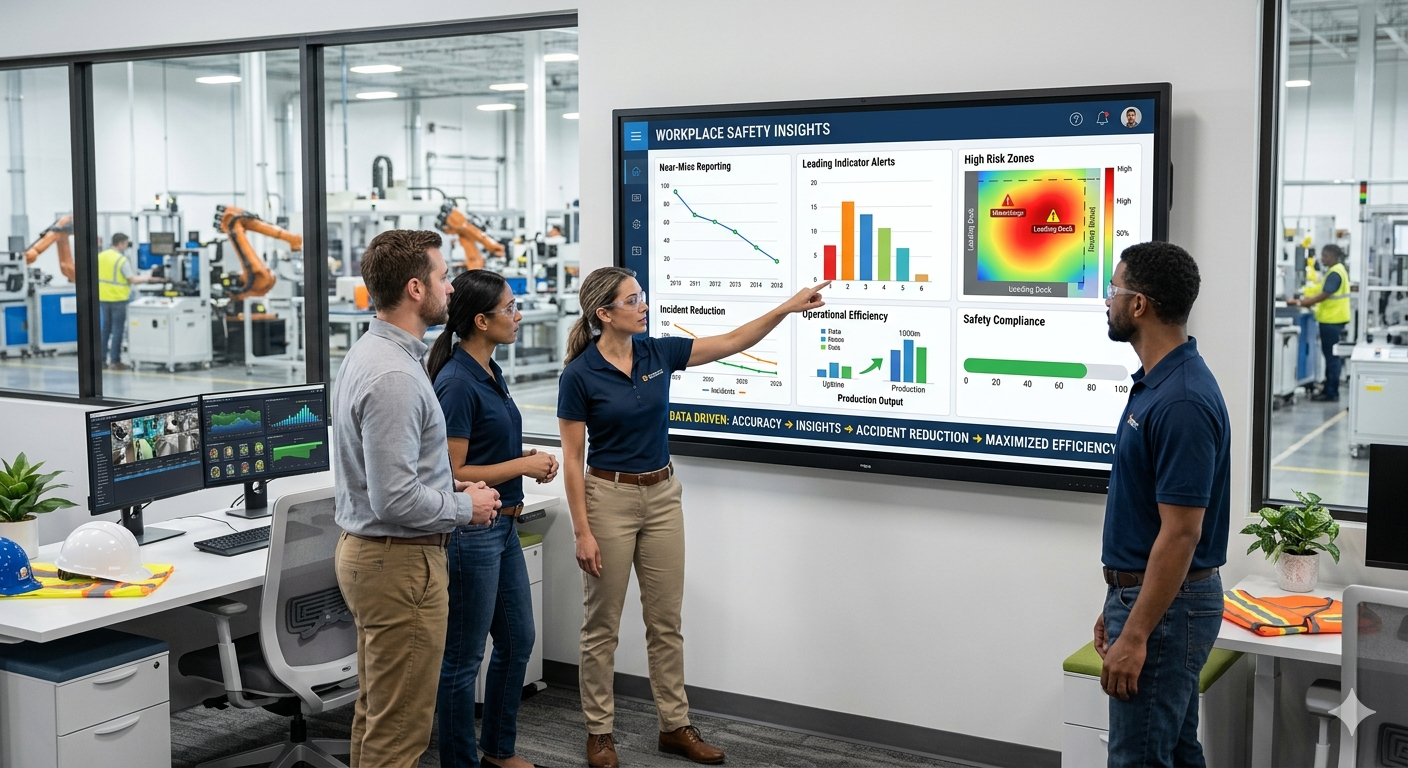
Accurately collecting safety data and transforming it into actionable insights isn’t just a compliance checkbox—it’s the ultimate superpower for reducing workplace incidents and supercharging operational efficiency. Here is how data-driven safety transforms modern workplaces.
- Shifting from Reactive to Predictive Safety
Traditionally, safety metrics have been lagging indicators. They tell you what already went wrong: injury rates, lost workdays, and workers’ compensation costs. While this data is necessary, it only helps you clean up the mess.
When you implement accurate, real-time data collection, you shift to leading indicators. These are proactive metrics that signal trouble before an incident occurs.
What Accurately Collected Data Looks Like:
- Near-Miss Reporting: Capturing the “close calls” that could have been fatal under different circumstances.
- Equipment Telematics: Tracking machine vibrations, temperature spikes, or maintenance delays.
- Behavioral Observations: Monitoring compliance with Personal Protective Equipment (PPE) or ergonomic guidelines.
By analyzing these inputs, safety managers can spot patterns. If data shows a spike in near-misses on a specific assembly line every Tuesday afternoon, you can investigate. Is it worker fatigue? A scheduling issue? A machine malfunction? Insights allow you to fix the problem before it becomes a headline.
- The Direct Link Between Safety and Efficiency
There is a long-standing myth that strict safety protocols slow things down. The data proves the exact opposite: Safe workplaces are inherently efficient workplaces.
When an incident occurs, the hidden costs ripple through an organization, decimating productivity:
| Incident Consequence | Impact on Safety | Impact on Efficiency |
| Machine Breakdown / Accident | Potential worker injury | Immediate halt in production |
| Investigation & Compliance | Mandatory safety audits | Management time diverted from operations |
| Damaged Equipment / Goods | Physical hazards introduced | Supply chain delays and material waste |
| Low Worker Morale | Increased stress and distraction | Higher absenteeism and slower work pace |
By using data to prevent that initial accident, you eliminate these bottlenecks. A safe floor is a smooth floor. Equipment that is maintained based on predictive data runs optimally, and workers who feel safe work faster and with greater focus.
- How to Turn Raw Data into Actionable Insights
Data is useless if it sits buried in a spreadsheet or a dusty filing cabinet. To drive real change, data must transform:
[Raw Data Collection] ➔ [Centralized Analysis] ➔ [Actionable Insights] ➔ [Targeted Intervention]
Step 1: Democratize Collection
Make it incredibly easy for teams to report data. Use mobile apps, QR codes on the shop floor, or wearable sensors. If reporting a hazard takes more than two minutes, workers won’t do it, and your data pool becomes inaccurate.
Step 2: Look for the “Why” (The Insights)
Raw data might tell you that slips and trips are up by 20%. An insight suggests that 80% of slips occur near the loading dock between 6:00 AM and 8:00 AM, due to morning condensation and poor lighting.
Step 3: Implement Targeted Interventions
Instead of forcing the entire company to undergo a generic, boring 2-hour safety seminar, you can deploy a 5-minute targeted fix: upgrade the lighting at the loading dock and install high-traction mats. You save time, save money, and solve the actual problem.
- Building a Culture of Trust
The secret ingredient to data accuracy is culture. If employees fear that reporting a near-miss or an equipment flaw will get them or their peers in trouble, they will hide the data.
When leadership uses data constructively—not to punish, but to improve processes, upgrade tools, and design safer workflows—trust builds. Employees realize their inputs directly impact their well-being. A highly engaged workforce reports more accurate data, creating a continuous loop of improvement.
The Bottom Line
In the modern landscape, data is just as vital as hard hats, steel-toed boots, and safety goggles. By accurately tracking the small details of daily operations, businesses can foresee hazards, protect their most valuable asset—their people—and eliminate the massive inefficiencies that accidents leave in their wake.
Don’t wait for an accident to tell you where your system is broken. Let your data show you the way forward.
What is the biggest barrier your team faces when it comes to reporting daily safety hazards or near-misses?
Fuzzitech’s Perspective
At Fuzzitech, we understand the unique challenges faced by mid-market manufacturers. We believe that the key to overcoming data bottlenecks lies in strategic integration and fostering a culture of transparency. If you’re ready to transform your data challenges into opportunities, connect with us. We’re here to help you to harness the full potential of your data.