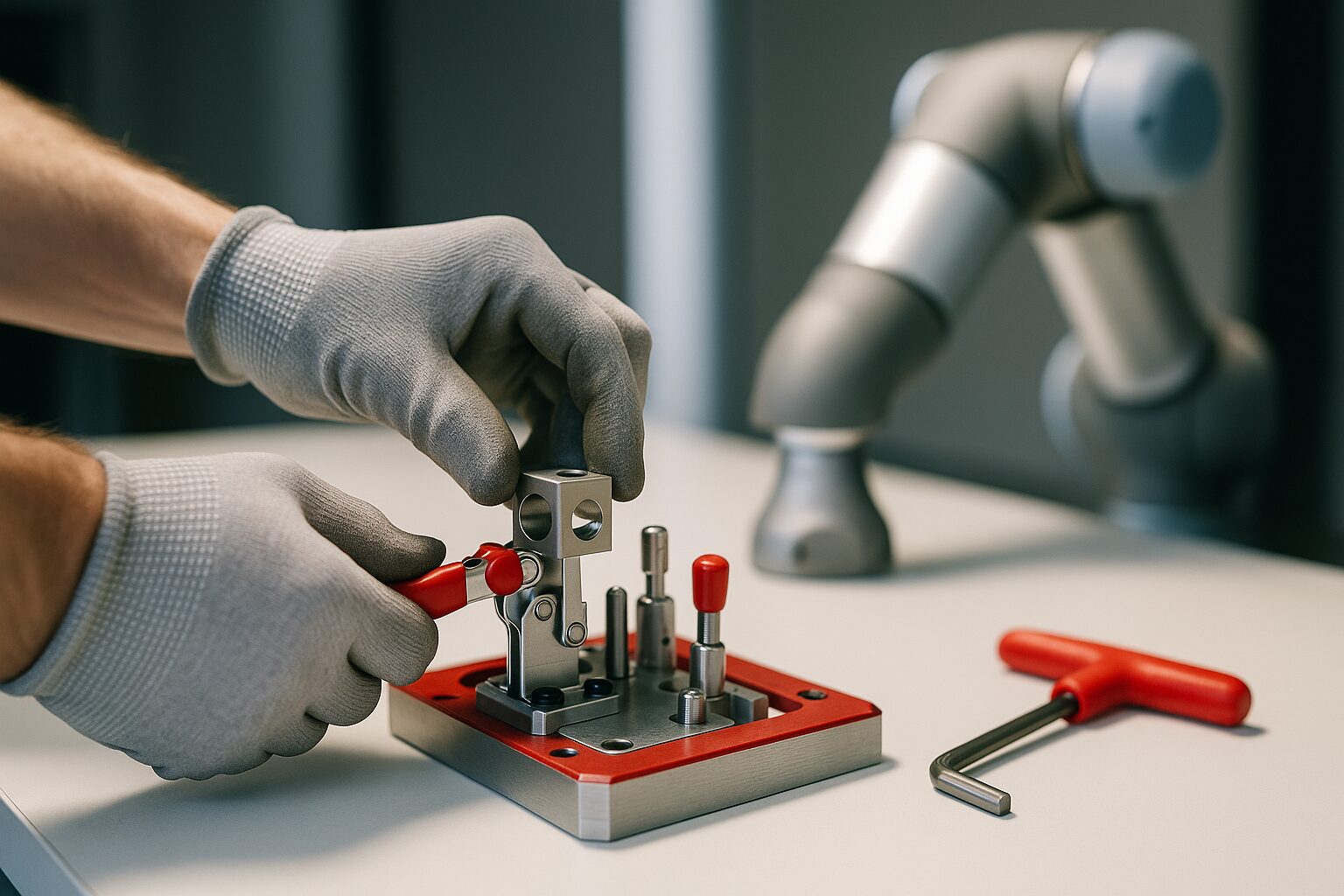
Walk onto any mid-market production floor, and you’re likely to find a familiar sight: workers manually setting up machines, tweaking controls, and adjusting fixtures. This isn’t just a task; it’s a routine that costs valuable minutes, even hours, across a production line. It’s Monday morning, and the plant manager is already dealing with a backlog of setups that threaten to delay the day’s output.
Operational and Financial Consequences
These manual processes aren’t just time-consuming; they directly impact productivity. Every additional minute spent on machine setups extends lead times and eats into capacity. The downstream effects are palpable: missed delivery dates, overtime costs, and ultimately, dissatisfied customers. With manual setups, the chance of human error rises, leading to quality escapes that further erode trust and profitability.
Why Manual Processes Persist
So, why do manual setups still dominate these production lines? Often, it boils down to outdated equipment and a lack of investment in automation technologies. Many manufacturers hesitate to adopt new systems due to perceived complexity or upfront costs, leaving them stuck in a cycle of inefficiency. This approach stalls AI projects that could otherwise streamline operations, as noted in our post on AI-driven continuous improvement.
Implementing a Practical Solution
Flexible automation cells offer a path out of this quagmire. Instead of clunky, one-size-fits-all machinery, these cells adapt to different production tasks with minimal setup time. By integrating automation that focuses on operational constraints, manufacturers can see immediate improvements in efficiency. Flexible cells use advanced technologies but are scalable and practical, fitting the budgetary constraints of mid-market operations.
Importantly, these solutions don’t promise an overnight transformation. What they do is incrementally reshape operations, making processes smoother and reducing errors. As detailed in our piece on unified insights, it’s about creating a system where machines communicate and optimize tasks in real-time.
What Success Looks Like
Imagine production setups that take minutes, not hours. With flexible automation cells, lead times shrink, allowing for faster and more reliable delivery schedules. The production floor feels less chaotic, and the team can focus on quality improvements rather than troubleshooting setups. Teams trust their data, decisions are made faster, and AI initiatives finally gain traction. This aligns with the insights shared in transforming operations from data silos.
Fuzzitech’s Take
At Fuzzitech, we believe that practical, scalable solutions like flexible automation cells can significantly enhance mid-market manufacturing efficiency. We focus on understanding the unique constraints of each operation and offer insights that bridge the gap between current capabilities and future potential. Ready to explore how these solutions can fit your operations? Let’s start a conversation. Visit our contact page to learn more.