Most manufacturing leaders we speak to describe the same moment of frustration: drowning in data yet starved for actionable insights. It’s a paradox that seems to pervade the industry, particularly among mid-market manufacturers. Despite having extensive data at their disposal, many leaders find themselves grappling with a fog of numbers that obscure rather than illuminate critical business decisions.
The Cost of Data Without Insight
When data remains unrefined and disconnected, the consequences ripple through the organization like a silent storm. Operationally, it can lead to inefficiencies, such as production lines running with suboptimal parameters due to outdated or misinterpreted data. Financially, the inability to harness data effectively can result in missed opportunities for cost savings and strategic investments. A plant manager relying on yesterday’s metrics, for example, may face unexpected downtime because the real-time adjustments needed weren’t made.
In an era where competitive advantage hinges on agility, the absence of clear data-driven insights can leave a manufacturer vulnerable. Delayed decisions translate into slower market responses, while quality escapes—defects slipping through—can damage customer trust and brand reputation. For many, this data paradox stalls AI initiatives before they can even scale, as discussed in our post on moving from pilot fatigue to strategic business outcomes.
Understanding the Data Disconnect
The root of this issue is often not a lack of data, but rather its fragmentation. Systems that were designed to operate in silos don’t naturally integrate, creating barriers to a holistic view of operations. This fragmentation prevents meaningful insights, as data doesn’t flow seamlessly across the organization. Our article on disconnected OT and IT systems further explores these challenges.
A Path to Clarity
To turn this data chaos into clarity, manufacturers must start with identifying operational constraints rather than jumping straight into technology solutions. The journey begins by aligning IT and OT systems, ensuring data flows in a manner that is both cohesive and comprehensive. This often involves adopting an incremental approach to connect disparate data sources, creating a unified data infrastructure that supports real-time decision-making.
In practical terms, this means focusing on building visibility into production processes and utilizing AI in a targeted, strategic manner. Our insights on solving data engineering challenges offer further guidance on implementing these changes effectively.
What Success Looks Like
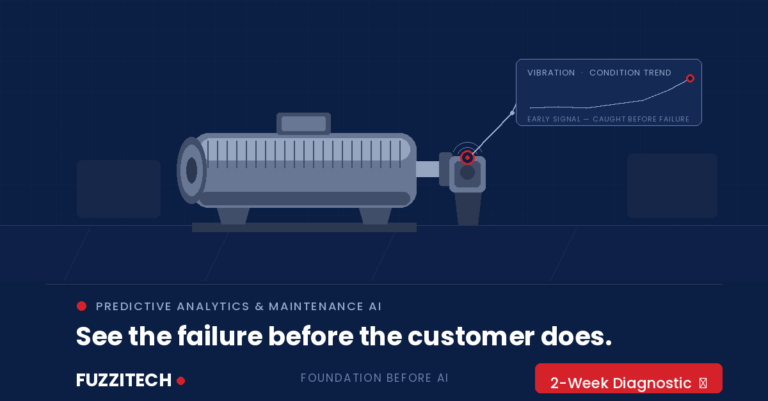
Imagine a manufacturing floor where decisions are informed by live dashboards reflecting current operating conditions rather than outdated reports. Teams become more proactive, addressing potential issues before they escalate, and AI systems enhance operational efficiency rather than complicate it. The integration of data streams results in fewer surprises and decisions that are swift and informed.
Quality improves as predictive analytics highlight potential defects early in the production process. This shift not only boosts output quality but also reinforces customer confidence and strengthens market position. The manufacturing operation becomes a well-oiled machine, with data serving as the lubricant that keeps all parts moving smoothly.
Fuzzitech’s Perspective
At Fuzzitech, we believe that clarity in data is within reach for mid-market manufacturers. By addressing the underlying disconnects and focusing on cohesive data strategies, manufacturers can transform their operations and leap ahead of the competition. Our tailored solutions are designed to empower your team with the insights needed to thrive in a data-driven world.
Ready to embark on this transformation? Reach out to us for a consultation through our contact page.