Advisory
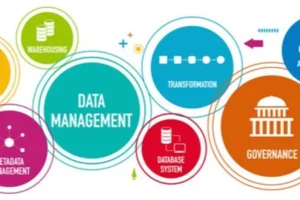
Tips for Leaders on Data Management and Governance Priorities
In today’s data-centric economy, a consistent and reliable flow of trusted data across people, teams, and business functions is crucial to the survival of any organization.

In today’s data-centric economy, a consistent and reliable flow of trusted data across people, teams, and business functions is crucial to the survival of any organization.

Companies like Airbnb and Uber have disrupted their markets and transformed customer experiences with teams that are a fraction of the size of the established market players.
Accelerated transformation is the key to sustained advantage in today’s digital economy. Digital transformation is a journey, not a destination, because by the time you get “there” it has already moved on.

While the future is uncertain, technology leaders must still identify and commit to strategic outcomes and initiatives. The immediate focus areas might differ depending on the organization’s size and stage.

Today’s economic uncertainty is driven by a combination of indicators never seen pre-pandemic. This has created an environment of doubt among technology leaders of midsize enterprises (MSE) on how to manage technology best in the future.
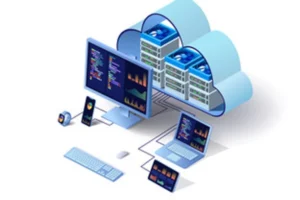
Every start-up and midsize enterprise must scale its software systems at some point. Developing a successful strategy to build or scale software systems to accelerate business growth demands a high-level understanding of the public cloud landscape by the leadership team.
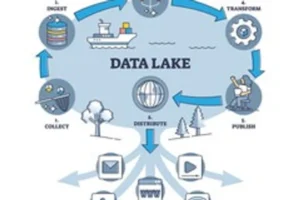
To be a truly data-driven organization, decision-makers should be able to make business decisions based on high-quality and holistic data consistently. Gartner’s 2022 Survey of

Businesses have been forced to change their operations dramatically in the last four years. For many organizations, the pandemic has catalyzed digital business initiatives as

The last four years have forced small and midsize enterprises (SMEs) to adapt and execute a technology transformation roadmap so their businesses can survive, operate,
Today, applications must scale rapidly, and users need increasingly faster access to complex data. It takes precise planning and execution to build a standards-based infrastructure